Tribalism and Belonging
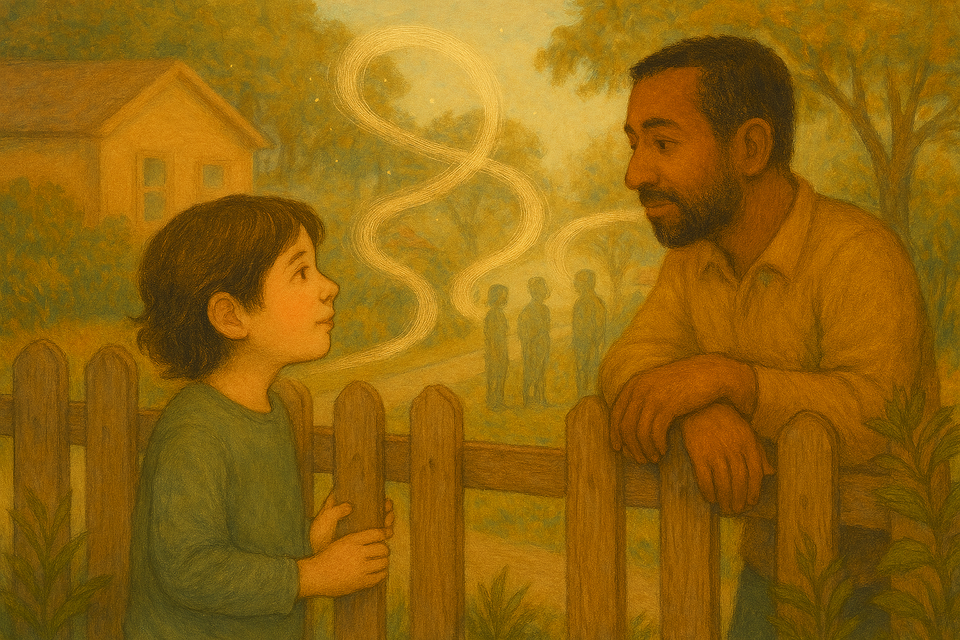
A child on one side of a fence and a neighbor on the other can feel like strangers. Tribalism is older than borders and newer than our politics; it’s the wiring that helped small groups survive and the storytelling that now organizes billions. At Super WEgo we treat that wiring as something to understand, not excuse. We want neighbors to use it for care, not exclusion.
Small Groups, Big Effects
Core idea: Humans evolved to cooperate in groups of roughly 50–150 people.
Those bands—what researchers call Dunbar’s number—were the scale where gossip, trust, and shared chores kept people fed and safe. In that setting, favoring the familiar made sense: share food with kin, watch each other’s children, and defend the camp.
- Why it matters now: The same instincts that made small groups resilient can make modern communities suspicious of outsiders.
- Everyday sign: We’re quicker to trust someone who looks, talks, or votes like us—even when our neighborhoods are more diverse than our instincts expect.
“Tribal instincts helped us survive. Today they can either bind neighbors together or build invisible walls.”
From Stories to Societies
Humans didn’t just rely on face‑to‑face ties. We learned to scale cooperation by telling stories—shared myths, laws, and promises that let strangers act as if they were kin. These “imagined orders” turned villages into cities, and cities into empires.
- Small stories: Rituals, local legends, and neighborhood norms that make a block feel like home.
- Big stories: Money, religion, and nationhood—systems that let millions coordinate but also create us‑versus‑them thinking.
Super WEgo lens: Stories are tools. Use them to invite, not exclude. Tell neighborhood stories that highlight shared care, not fear.
A Short Timeline That Explains a Lot
- Hunter‑gatherer bands: Cooperation by proximity and kin.
- Villages and chiefdoms: Myths and leaders scale trust beyond kin.
- Writing and law: Rules coordinate larger populations and enforce belonging.
- Universal religions and money: Abstract systems that bind strangers into common purpose.
- Nation‑states and borders: Modern identities that can mobilize millions—and also harden divisions.
Each step increased scale and coordination. Each step also introduced new ways to mark insiders and outsiders.
How Tribalism Shows Up in Our Streets
Tribalism isn’t only about flags or wars. It shows up in zoning that separates neighbors, in local gossip that shuts newcomers out, in the way services get distributed, and in who gets invited to community tables.
- Nested identities: You can be a neighbor, a fan of the same team, a member of a faith, and a citizen—all at once. Those layers help and complicate belonging.
- Everyday consequences: People who don’t “fit” local stories—new immigrants, renters, young families—often face small exclusions that add up.
Super WEgo view: These are solvable problems when neighbors choose care over default suspicion.
Stories That Make Change Possible
We learn to scale cooperation the same way we learned to scale exclusion: through stories and practices. That means we can rewrite the story.
- Local rituals matter: A monthly potluck, a shared tool library, or a block check‑in becomes a new story that includes more people.
- Practical habits matter: Helping someone fill out a form, translating a flyer, or walking a new neighbor through the bus route are small acts that change who belong.
- Visible signals matter: Welcome signs, multilingual notices, and public recognition of helpers tell a different story than “keep out.”
What Neighbors Can Do This Week
- Listen first. Spend 10 minutes asking a neighbor about their week and what they need.
- Share one small resource. Lend a tool, share a ride, or photocopy a form.
- Start a micro‑ritual. Host a 30‑minute chat about community within your workplace.
- Tell a different story. Post one short note in the neighborhood group about someone who helped—name, action, thanks.
These are not gestures of charity. They are the civic practices that rewire tribal instincts toward inclusion.
Closing Call to Action
Tribalism is part of us; neighborliness is a practice we can teach ourselves. This week, pick one of the four actions above and do it. Then share the story in the the comments section. We’ll collect these neighborhood stories and turn them into practical guides—because belonging grows from small, steady acts, and every block that chooses care makes the next one easier to join.