How Neighbors Rewrite Borders
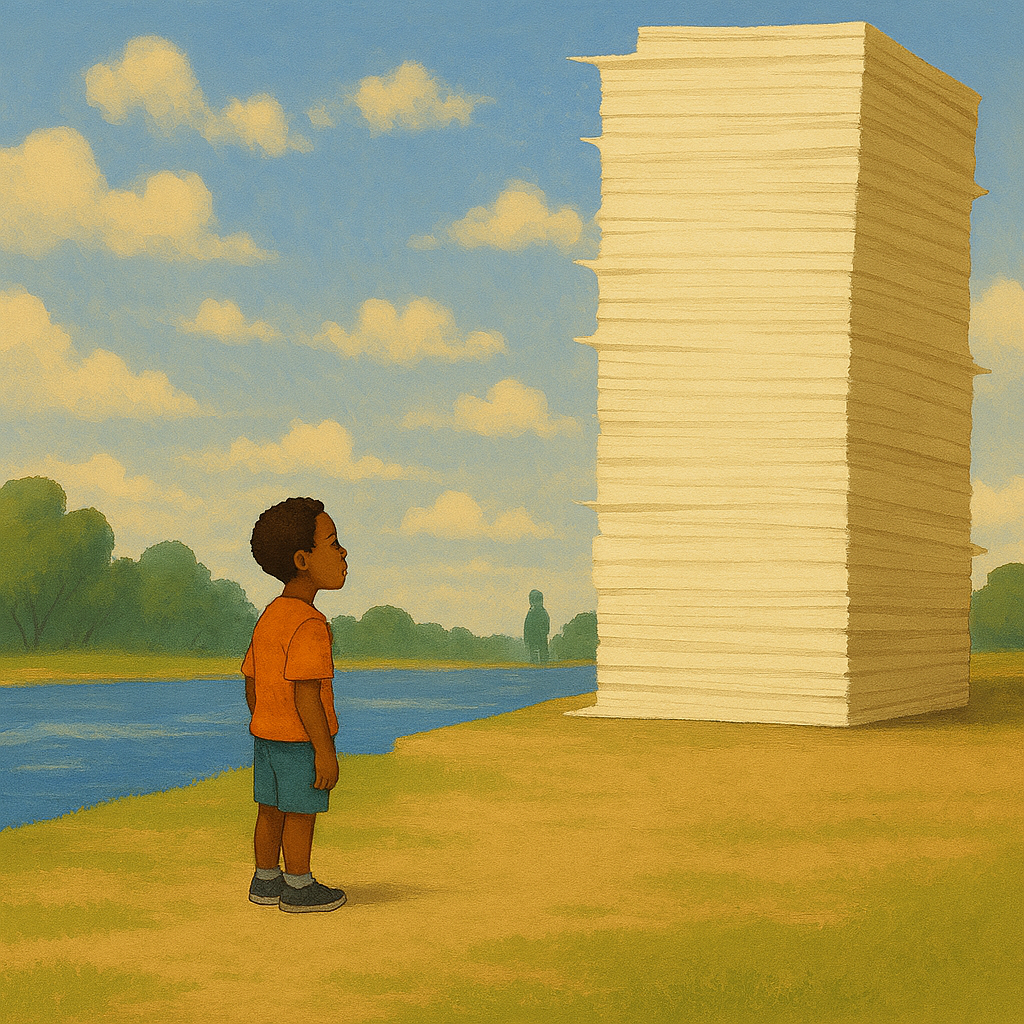
A child can cross a river and see the same sky as a neighbor, yet a stack of papers can keep them from ever leaving the place they were born.
Belonging Over Bureaucracy
When Onyx first arrived on the block she learned to read stamps before street names. Envelopes brought denials, notices in languages she didn’t speak, bills that assumed an address she could not prove. She worked nights at the hospital, came home at dawn, and kept the radio low so neighbors wouldn’t hear the worry in the voices. Her son Jasper wanted to ride the bus to the river; the bus driver asked for ID, the school asked for proof of residence, the clinic asked for a card. Each request was a small gate. Onyx had no keys.
Onyx's neighbor, Aquila, saw Onyx dejected at the bus stop with Jasper and a folded paper. Later that day Aquila knocked on Onyx's door with a bouquet of flowers and asked, “What do you need?" Onyx spread the letters on her kitchen table and read aloud. They called the clinic together, found a Saturday legal clinic, translated forms for her, circled the boxes that mattered, and photocopied a birth certificate from a shoebox. They learned which office opened when and which official might listen. Each small act was a lever.
The first time Jasper boarded a bus with a stamped ticket and a signed permission slip, Onyx cried. It wasn’t a grand victory; it was a sequence of tiny, stubborn wins—a photocopy, a signature, a phone call that reached a human. Those wins rewired the block’s story about who belonged there.
Borders are not only mountains or walls. They live in forms, office hours, and assumptions about who has papers. They are habits we accept until someone refuses to accept them for a neighbor.
Civic Care: Small Practices Build Community
At the Saturday clinic a retired teacher helped a man apply for a travel document; a teacher scanned files and learned how to ask questions at the city office. The clinic became a ritual. Rituals change expectations. Clerks who meet a community that shows up are more likely to explain options; school administrators who meet a parent in person are more likely to find a workaround.
Small civic practices scale. A photocopier in a church basement is not a treaty, but it is a bridge. A translated flyer is not a law, but it opens a door. When neighbors practice inclusion, they create pressure that ripples outward.
Onyx now volunteers at the clinic, folding forms and pointing to the boxes that matter. She brings lentil soup on cold mornings and tells new arrivals, “Bring your papers. Bring your questions. Sit down. We’ll read them together.” Her voice is steady because she has learned the civic habit of staying.
“Belonging is built from small, steady acts—one photocopy, one translated form, one neighborly conversation at a time.”
What Neighbors Can Do Now
Systems don’t change overnight. They change when neighbors refuse to let paperwork be the final word on dignity. When communities practice inclusion as routine, the lines on maps begin to mean less than the lines we draw between people who help and people who turn away.
- Sit with a form for 30 minutes and help a neighbor complete it.
- Translate and post one flyer in the languages people actually speak.
- Start a 30‑minute check‑in with a neighbor.
- Publicly name and thank one person who helped—recognition rewrites norms.
Share one story from your block: a neighbor who helped, a form that was filled, a small ritual that changed expectations. Super WEgo will collect these acts into neighborhood guides so other blocks can copy what works.