Borders and Belonging
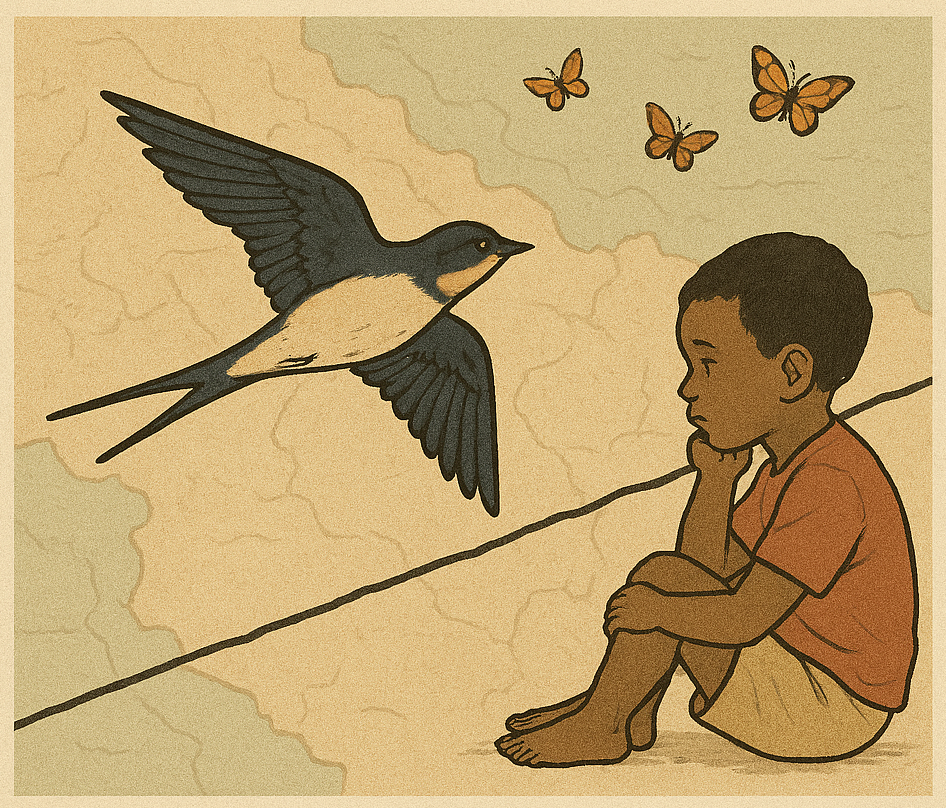
Imagine a bird flying across a line on a map without a passport, while a child born a few miles away cannot leave the place they were born. Borders shape lives in ways we rarely see — and often in ways that feel deeply unfair.
Why Humans Made Borders
Humans began settling about 10,000 years ago. As communities grew around farms and resources, people started marking territory. The earliest recorded artificial borders appear in ancient Mesopotamia around 2500 BCE, where city‑states carved boundaries into stone. Over time, natural features like rivers and mountains became frontier markers; later, walls, forts, and treaties formalized those lines.
How History Built Today’s System
- Ancient markers set the idea that land could be owned and defended.
- Roman frontiers (the Rhine and Danube) shaped regional control and infrastructure.
- Treaties like Alcañices (1297) stabilized some borders that still exist.
- The Peace of Westphalia (1648) made sovereignty the organizing principle of international order.
- The 20th century standardized travel documents and tightened controls as states multiplied and global travel expanded.
These steps created the modern nation‑state: a territory with centralized authority that controls who crosses its lines.
Passports, Power, and People
Before World War I, travel rarely required formal documents. After the war and through decolonization, passports and border controls became the norm. Today, 193 UN member states issue passports that grant varying degrees of mobility. But not everyone benefits equally from this system.
Key reality: If a state recognizes you as a citizen, it controls your movement. If it doesn’t, your freedom to travel and access services can be severely limited.
Where Birth Determines Freedom
Consider people born in different places and how that birth shapes their mobility:
- Born in an Antarctic research station: no sovereign state; nationality usually follows parents.
- Born on a ship at sea: no sovereign state; nationality often follows the ship’s flag or parents.
- Born in unrecognized territories (e.g., Somaliland): residents rely on other documents (usually parents) and face barriers.
- Born in disputed or non‑UN entities (e.g., Taiwan, Vatican): passports vary widely in power and acceptance.
- Born in Palestine: limited visa‑free access and frequent rejection.
- Born in refugee camps or stateless births: many become legally stateless and face extreme restrictions.
A baby cannot choose where they are born, yet that fact can determine whether they can leave, work, or access basic services.
The Human Cost of Statelessness
More than 4.4 million people are known to be stateless, with millions more undocumented. Statelessness can result from gaps in nationality laws, discrimination, state collapse, or bureaucratic error. Without recognized documents, people often cannot board planes, obtain legal work, or access healthcare and education. Some rely on rare travel documents issued under the 1954 UN Convention; most do not receive them. The result is confinement, detention, or dangerous attempts to move without papers.
“Statelessness traps millions in a geography they never chose.”
Why This Matters to Super WEgo
Borders are not just lines on maps; they are rules that shape daily life and dignity. At Super WEgo we care about how systems include or exclude neighbors. When a person’s ability to belong or move is decided by accident of birth, our shared values — compassion, neighborliness, and practical care — demand attention.
What We Can Do Locally
- Listen to local stories of human migration, belonging, and exclusion.
- Support organizations that help with documentation, legal aid, and resettlement.
- Create neighborhood practices that reduce isolation for newcomers and undocumented neighbors.
- Celebrate small acts that build trust: shared meals, check‑ins, and practical help with forms or appointments.
Small, steady acts of care change how people experience borders in their daily lives.
Super WEgo Turns Acts into Shared Culture
Share one local story of belonging or exclusion in the comments — a neighbor who helped, a family who arrived, a time someone was turned away. Tell us one small thing you can do this week to make your block more welcoming. We’ll collect these stories and practical ideas to build neighborhood guides that help people move from isolation to belonging.
Sources and Further Reading
Archaeology & Early History
- Göbekli Tepe (UNESCO World Heritage) — Overview of the site and its significance for early communal construction and ritual gatherings.
- Göbekli Tepe: The legacy of Göbekli Tepe (The Archaeologist) — Article on how Göbekli Tepe reshapes our understanding of pre‑agricultural social organization.
- Lagash–Umma boundary conflicts (Wikipedia) — Coverage of early Mesopotamian border disputes and boundary steles that document ancient artificial borders.
Roman Frontiers & Medieval Treaties
- Danubian Limes (Wikipedia) — Summary of the Roman frontier system along the Danube and Rhine and its archaeological remains.
- Treaty of Alcañices (Britannica) — Authoritative entry on the 1297 treaty that helped stabilize the Portugal–Spain border.
State Formation & Sovereignty
- Peace of Westphalia (Britannica) — Encyclopedic summary of the 1648 treaties and their role in establishing modern state sovereignty.
Passports, Travel Documents & Statelessness
- Passport history — The ICAO era (Passport‑Collector) — History of passport standardization and the ICAO era, including machine‑readable and biometric developments.
- 1954 Convention relating to the Status of Stateless Persons (UNHCR PDF) — Full text of the 1954 Convention and its provisions for stateless persons and travel documents.
- 1954 Convention travel document (Wikipedia) — Explanation of the travel documents issued under the 1954 Convention and how they function.
- UNHCR Global Report 2024 (PDF) — UNHCR global report with statelessness data, trends, and programmatic responses.
- Statelessness Alliance — Global overview — Aggregated overview and resources on global statelessness and advocacy efforts.